
The Search That Consumes
I'll Be Gone in the DarkThis thread follows how the pursuit of the case becomes a form of seeking that connects amateur researchers and investigators, sustains collaboration, and raises questions about obsession and ethical limits.
increasing Bearing strength in each event
 decreasing
Bearing strength in each eventdecreasingA Search Begins
A Search Begins
From Interest to Method
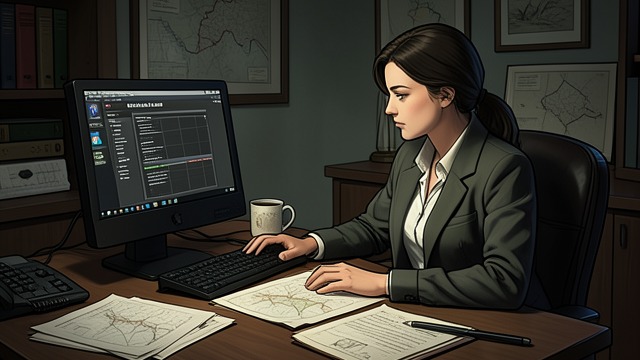
After years of fascination with unsolved crimes, Michelle McNamara created True Crime Diary and began using online records, digitized directories, and mapping tools to investigate cold cases. The Golden State Killer case drew her in because its victims, jurisdictions, and unresolved clues seemed both enormous and potentially searchable.
The Reward of the Next Click
She worked late after her family slept, moving between police reports, yearbooks, maps, and possible suspects. The activity brought the pleasure of discovery, but each promising lead also created another question, another name to verify, or another path that could end in a dead end.
The book presents the search as intellectual work and as an appetite that could become difficult to govern. The Internet expanded what one person could inspect, while the scale of the case made stopping feel like abandoning a puzzle that might still yield to one more piece of research.
The Shared Rabbit Hole
The Shared Rabbit Hole
Amateur Work Meets Investigation
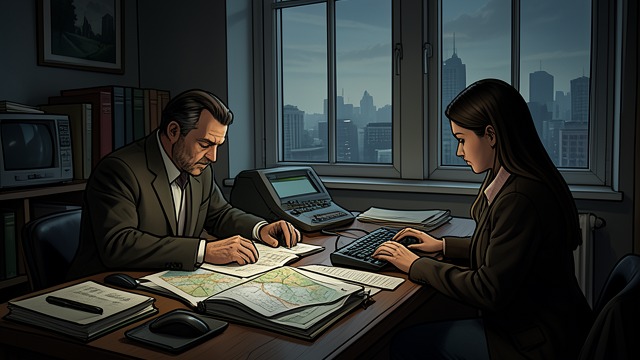
Michelle joined online discussions where researchers traded maps, witness accounts, and theories. The community included careful data miners as well as mistaken or overconfident speculators, and active investigators sometimes used the forum indirectly to solicit help or direct attention toward a lead.
Collaboration Requires Judgment
Michelle valued the skill and seriousness of some contributors, including The Kid, whose large database of possible suspects helped organize a sprawling search. Yet the board’s size, conflicts, and appetite for confidential hints also made clear that crowdsourcing needed filters and responsible boundaries.
The case became a shared project without becoming an open invitation to treat every theory as fact. The best contributions narrowed questions or exposed overlooked connections; the weakest risked turning resemblance into accusation. The community’s energy mattered precisely because it had to be paired with restraint.
A Reporter’s Unfinished Work
A Reporter’s Unfinished Work
Reporting Becomes Personal
Michelle’s reporting took her to crime scenes and into conversations with survivors, families, and investigators. Her work joined digital research to interviews and archival records, bringing the human consequences of the case into a process otherwise dominated by maps, suspects, and forensic details.
The Cost of Attention
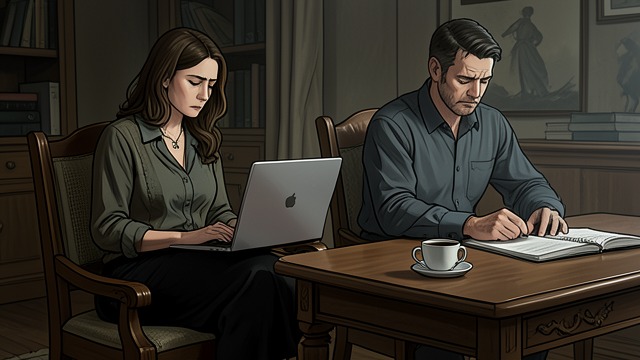
Her husband, Patton Oswalt, saw the toll of sleepless nights and the case’s intrusion into family life. Michelle herself recorded how the pursuit affected her, including moments when fear and exhaustion blurred the line between investigating violence and living under its shadow.
The book does not treat obsession as an uncomplicated virtue. Persistence can recover neglected evidence and sustain attention to survivors, but it can also consume the researcher’s time, health, and relationships. Michelle’s candor makes that cost part of the story rather than a heroic detail to be overlooked.
The Survivor’s Perspective
The Survivor’s Perspective
An Account Reconsidered
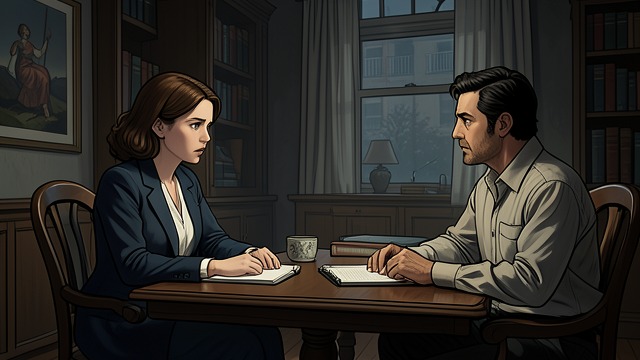
When Paul Holes and a colleague met with Kathy, she was upset by the way Larry Crompton had portrayed her in his book. His account implied that her behavior during the assault revealed something about her character, a judgment that ignored the many ways a frightened person might respond in the moment.
Listening as Correction
Holes remembered that Kathy was shaking and barely made eye contact. Rather than pressing her with questions, he allowed his colleague to lead the conversation. Kathy then shared a potentially important detail: her former husband had said he thought he recognized the attacker’s voice.
The meeting shows that investigative work is not only the collection of biological samples or location data. It also depends on how survivors are heard and whether their accounts are approached without blame. Respect can make space for information, while careless interpretation can reproduce harm long after the original crime.
The Genetic Boundary
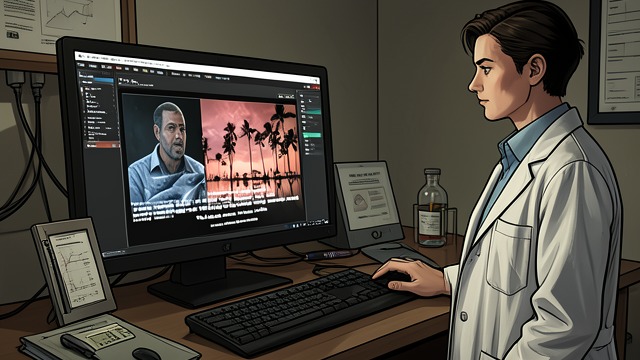
The Genetic Boundary
A New Route to Relatives
Investigators and researchers explored whether DNA databases could reveal relatives of the unidentified offender. Y-chromosome comparisons offered possible family names, while newer genealogical databases promised a much larger pool of potential connections.
Promise Against Privacy
Michelle McNamara considered whether the offender’s profile could be submitted to commercial genealogy services. The book also records the obstacles: companies’ privacy policies, legal questions, and the absence of a direct sample suitable for the proposed approach. Colleen Fitzpatrick explained that distant matches might suggest a family line or broad ancestry without identifying one individual.
The search for a name therefore confronts an ethical question as well as a technical one. A method capable of finding relatives may help solve violent crimes, but its use can implicate people who never consented to be part of an investigation. The book leaves that tension unresolved, just as it leaves the larger case unresolved.
2006–2012
2011–2013
2012–2016
2013
2013–2017
